We’re excited to be leading the restoration of s’o’ hil xus for public use. The name s’o’ hil xus (s-oh heel hoos) translates to “water of the bear,” or “Bear Spring,” and references the unique wetland feature located on the site. As part of the public outreach process, members of several coastal Chumash bands reviewed historic records and identified local place names, ultimately proposing a name that reflects the site’s cultural, ecological, and historical significance. The name honors the Chumash connection to the coast and reflects the importance placed on respecting and prioritizing the natural world within Chumash culture.
Formerly known as the Ellwood Marine Terminal, s’o’ hil xus is a 20-acre coastal restoration site located on UC Santa Barbara’s North Campus between the North Campus Open Space restoration site, Coal Oil Point Reserve, and Ellwood Mesa. Originally developed in the 1920s for oil storage and transport, the site contained storage tanks, pipelines, roads, and other industrial infrastructure associated with offshore oil production. After UCSB purchased the property in 1994, plans were developed to decommission the facility and restore the site to open space and native habitat. In 2024, large-scale restoration work began with the removal of eucalyptus screening trees, oil tanks, pipelines, and associated infrastructure. Although most known contaminated soils have been removed, soil and water remediation is ongoing, with cleanup assessment and additional work expected to continue over the next 2–5 years.
Following the completion of site grading and the rebuilding of the historic high point that was leveled during tank construction in 1929, restoration efforts are now focused on establishing a diverse mosaic of native grassland, wetland, scrub, woodland, and coastal dune habitats. These efforts aim to reconnect s’o’ hil xus with the surrounding protected coastal open spaces.
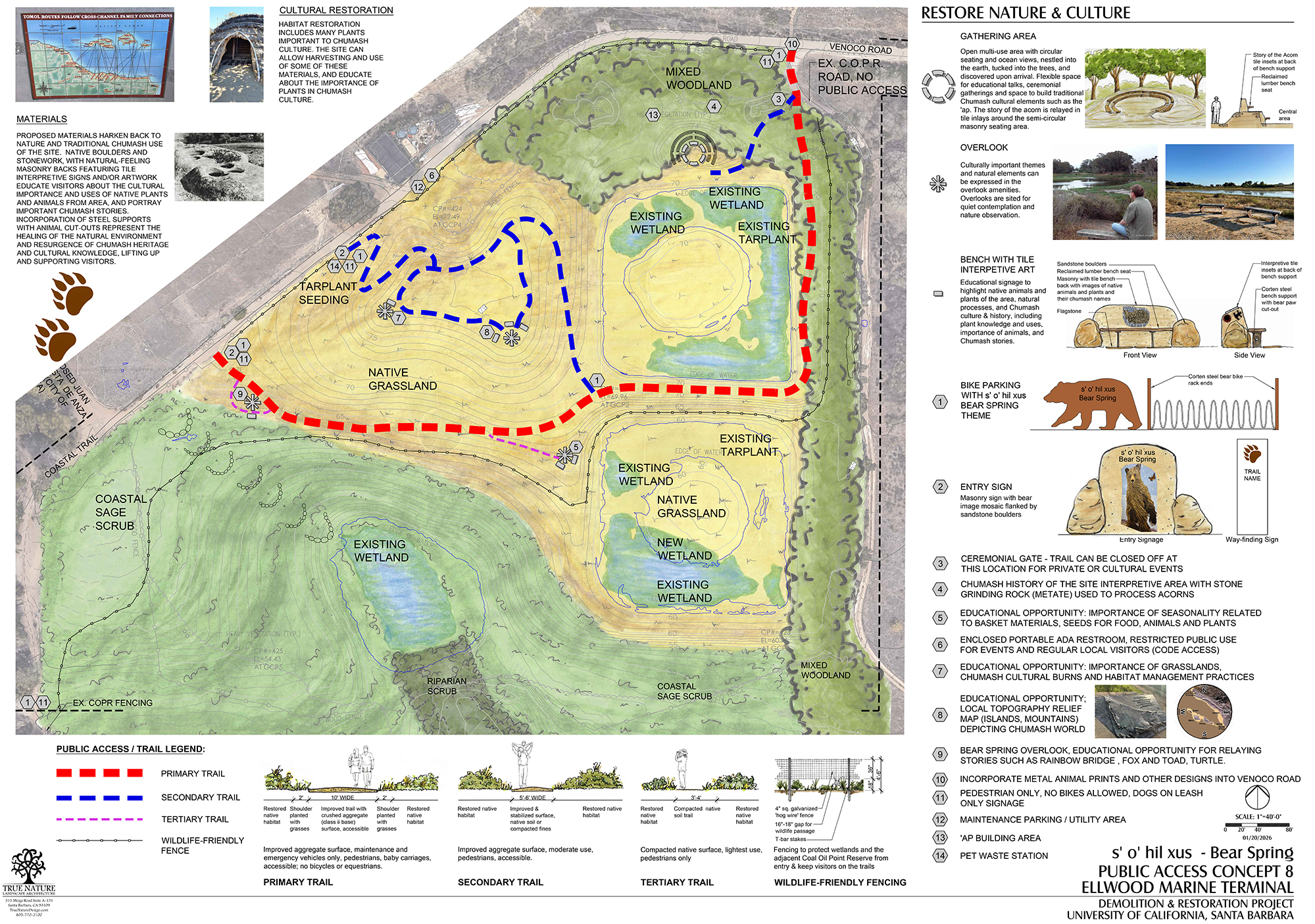
The map below represents the latest conceptual public access plan for s’o’ hil xus as of May 2026. We anticipate opening the site to public access in 2028. The plan incorporates feedback and concepts provided by Chumash community members and remains in draft form pending final details. We welcome your feedback and ideas on this concept. Please share your thoughts by emailing ncos@ccber.ucsb.edu. Also, if you would like to receive communications and updates about the restoration project, please subscribe to our newsletter.
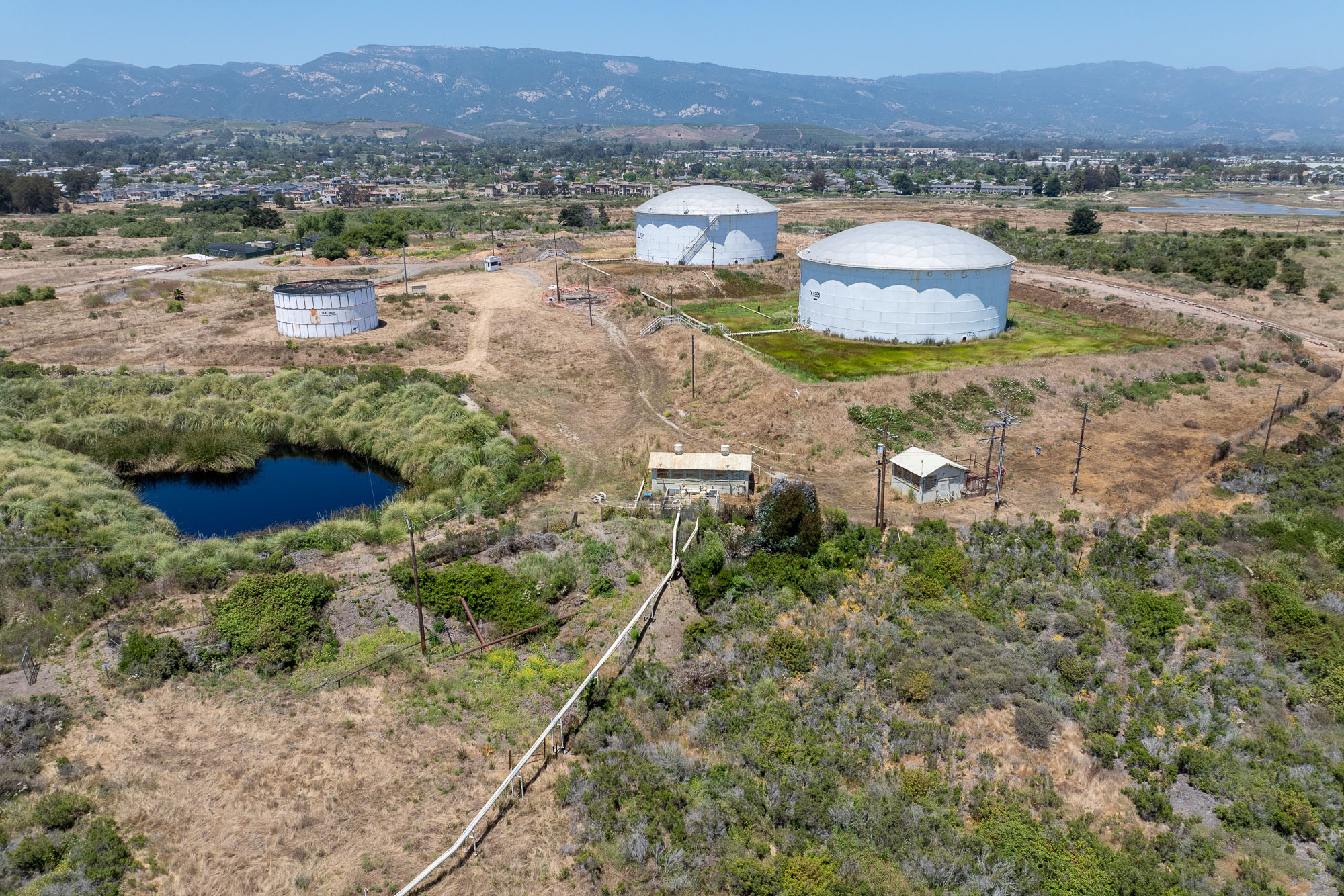
s’o’ hil xus before restoration in 2024
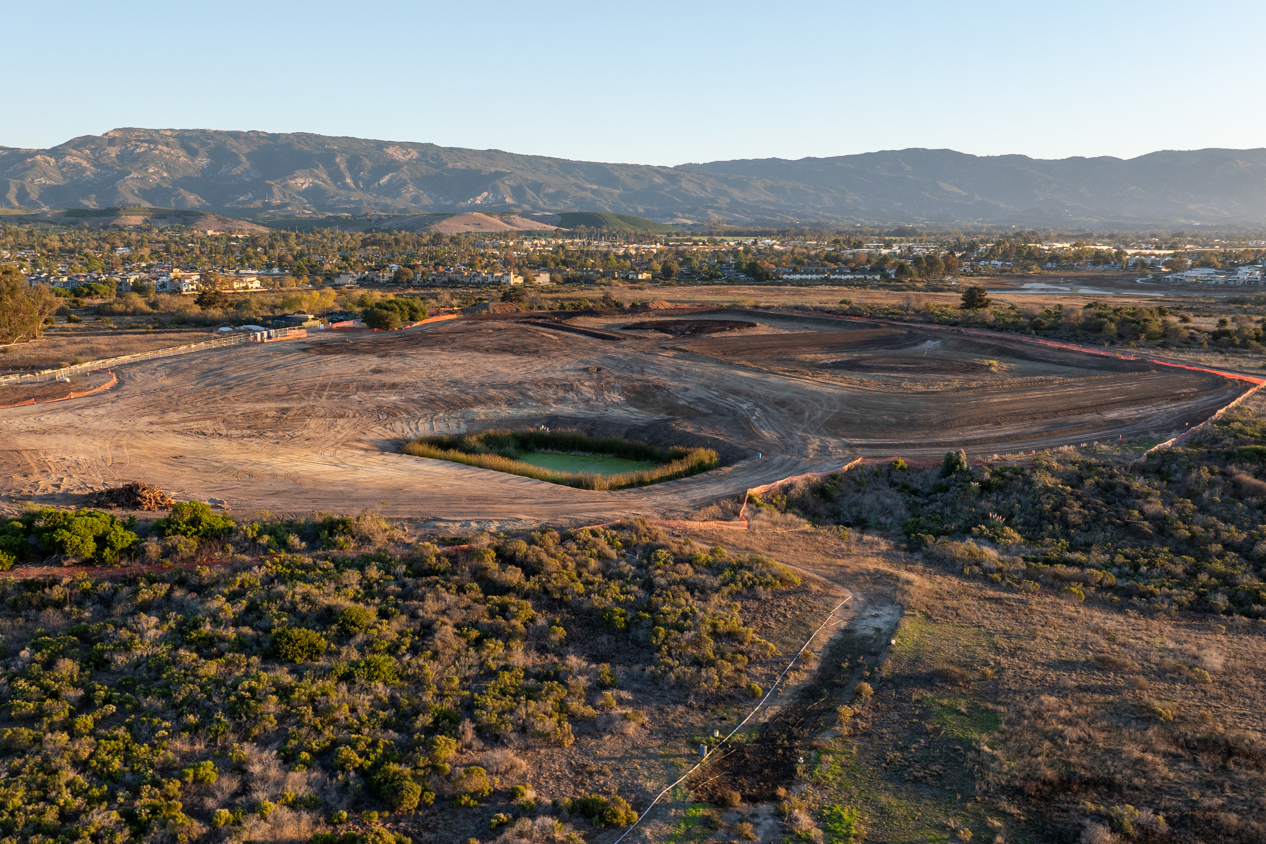
s’o’ hil xus following grading in February 2026
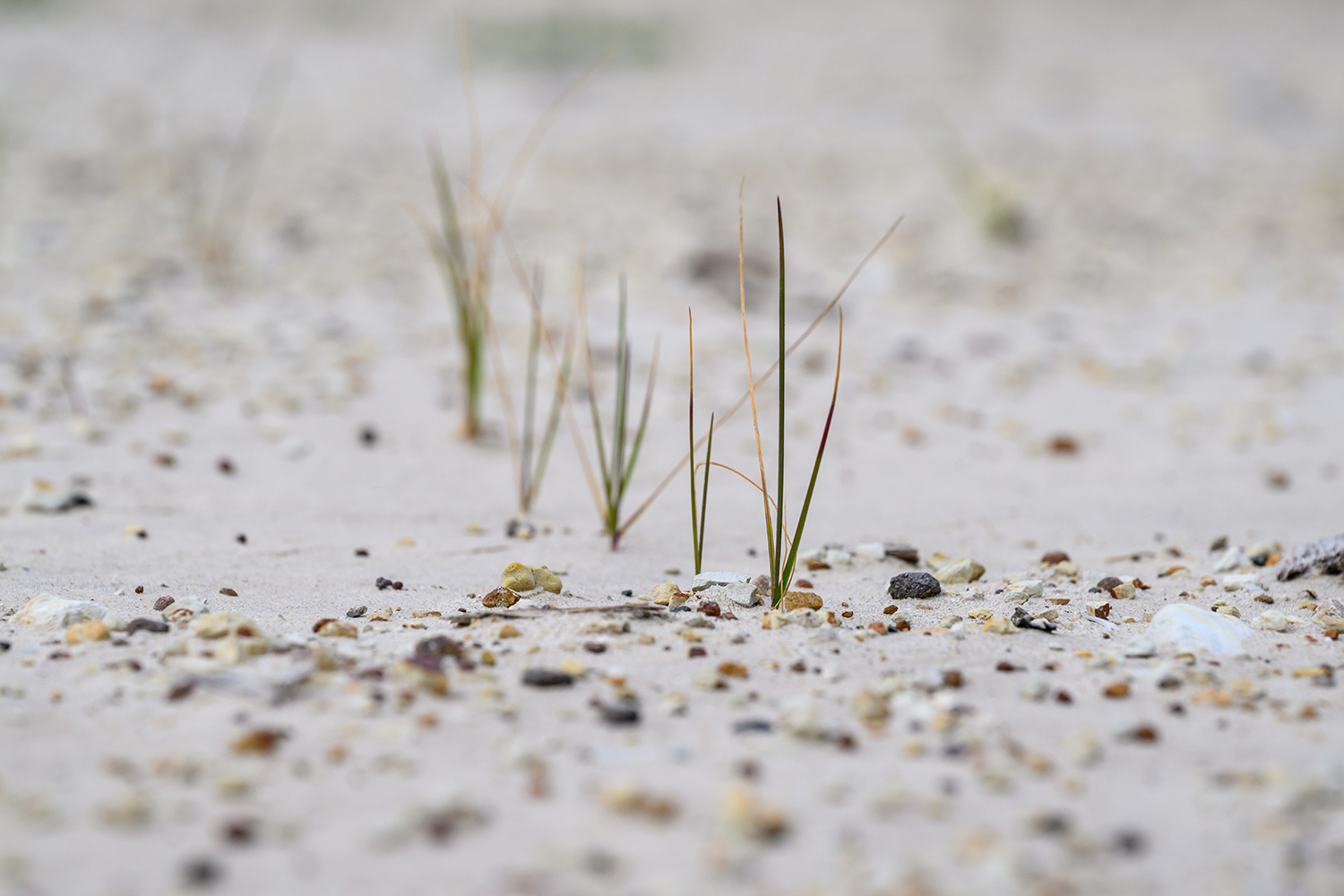
The first germinants of purple needlegrass (Stipa pulchra) following drill seeding efforts in early 2026
s’o’ hil xus at a glance
Date Initiated: 2024
Size: 20 acres
Habitat types: Coast Live Oak Woodland, Coastal Sage Scrub, Freshwater Marsh, Grassland, Vernal Pool,
Special Status Species: Centromadia parryi ssp. australis (Southern tarplant)
All Cheadle Center restoration monitoring reports, databases, and referenceable data are stored in the Cheadle Center eScholarship repository and can be accessed through our Data and Research Resources page.

Southern tarplant (Centromadia parryi ssp australis)
Photo Documentation
Click on the points to access monitoring photos.